
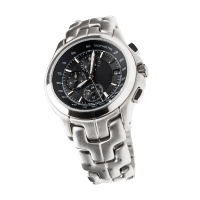
 Luxury Watches
 Diamonds
 Jewelry
 Gold
 Gemstone
 Estate Jewelry
 Silver
 Platinum
A Rolex is usually the single most valuable thing in a jewelry box, and selling one feels accordingly high-stakes. It helps to know that a watch offer isn’t a mystery number either. It’s built from identifiable things — the reference, the condition, what’s original, what’s in the box — and a proper evaluation walks through them one by one, with the watch on the counter in front of you. Here’s how it works at our store on 47th Street, and what to bring so one visit is enough.
You don’t need an appointment — or the box
Let’s clear the biggest misconception first: box and papers are not required. A full set — inner and outer boxes, warranty card, booklets, hang tags, extra links — strengthens an offer, because the next buyer wants it too. But a watch without them is evaluated on its own merits every day. Plenty of honest watches lost their paperwork to a house move in 2009. If you have the extras, bring them. If you don’t, bring the watch.
What you should bring:
- The watch itself, exactly as it is. Don’t polish it, buff it, or have it serviced first — more on why below.
- Box, papers, and purchase paperwork if you have them: warranty card, booklets, tags, original receipt, service invoices.
- Every spare link. Bracelet length is real money on some references; links sitting in a drawer at home are part of the watch’s completeness.
- A government-issued photo ID. Expect to show it if you sell; reputable buyers record purchases.
And one thing to leave alone: don’t open the caseback yourself, and don’t let an unauthorized shop do it “to check.” Tool marks and a disturbed seal create questions a buyer then has to price around.
How the evaluation works
An evaluation starts with identification. The reference number defines the exact model — for many Rolex references it’s engraved between the lugs at the 12 o’clock side, and on modern pieces the serial appears on the inner rehaut (the ring under the crystal) at 6 o’clock. A Submariner, a Datejust, a Daytona, and a GMT-Master II may share a case shape at a glance, but they live in different markets, and within a model, the reference decides which market. Dial variant matters too: an olive-dial Day-Date and a silver-dial Day-Date are both Day-Dates, but they are not the same watch to a buyer.
From there, the watch is examined for authenticity and originality: dial, hands, bezel, crown, and bracelet are checked against what the reference should carry, the bracelet is assessed for stretch, and the movement’s running condition is considered — a watch that needs a full service is priced differently from one that was serviced last year, because the buyer is the one who will pay for that service. None of this requires your watch to disappear into a back room; at New York One Pawn, the evaluation happens at the counter where you can follow along and ask questions.
The six things that shape a Rolex offer
- Model and reference. Demand is not evenly distributed. Professional models — Submariner, Daytona, GMT-Master II — move differently from a classic Datejust, and specific references within a line move differently again.
- Condition. Honest wear is expected on a worn watch. Deep dents, a damaged bezel, or a scratched crystal cost more than light surface marks.
- Originality. The dial, hands, and parts the watch was born with are worth more than later replacements. A service dial can be perfectly functional and still change the offer.
- Polishing history. A heavily polished case loses its sharp edges and original lines, and collectors notice. This is why “making it look new” before selling usually backfires — an unpolished honest watch is often the stronger piece.
- Completeness. Box, papers, tags, and full links — the “full set” premium is real, even though none of it is required.
- Service history. A documented recent service (invoice or service card) removes an unknown for the buyer. No history doesn’t disqualify a watch; it just means the buyer prices in the possibility of a service.
Underneath all six sits the live secondary market, which moves — sometimes week to week for in-demand references. That’s why quotes have a shelf life and why comparing two offers a month apart tells you less than comparing two offers on the same day.
A note on older pieces
Vintage references are judged by slightly different rules. On a 30- or 40-year-old watch, the original dial and hands carry even more weight, a nicely aged dial can be a feature rather than a flaw, and period-correct parts matter. Bring any old service records you have, even handwritten ones — provenance is part of what a buyer is purchasing, and paper from decades ago still speaks.
Comparing offers on 47th Street
The Diamond District’s density is your advantage: several buyers, one block, same afternoon. Use it properly. Ask each buyer what they’re basing the offer on — reference, condition notes, completeness — and be wary of a number given from across the room without the watch being examined; a sight-unseen high quote that gets “revised” after inspection is an old pattern. A serious offer survives questions. Also be clear on which decision you’re making: selling outright is one path; if you want the watch back, a collateral loan against it is a different conversation, and it’s one we’re glad to have at the same counter.
If you decide to sell
Take your time — an evaluation carries no obligation, and a watch you’ve owned for twenty years deserves a considered yes. If you do sell, you’ll show ID, the sale is recorded, and you leave with payment and paperwork for the transaction rather than a verbal promise. If you’d rather think it over, the watch goes back on your wrist and the offer simply expires with the market.
We’re at 67 W 47th St, open Monday–Friday 9:30 AM–6:30 PM and Sunday 10 AM–5 PM, closed Saturday. Bring the watch — and whatever of its set survives — or call (212) 278-8282 before you come in. The box helps. It was never the point.


